
Build a Chatham County Search Trail
Start with the assessment search. The Chatham Tax FAQ names three search keys: property ID, address, and owner name. Address seems fastest. But unit numbers and abbreviation differences trip it up. An owner name search can pull several parcels, since trusts, LLCs, initials, punctuation, and co-owners hide or multiply matches. The PIN is the cleanest exact bridge. Once found, the PIN anchors every later step.
Keep a small source log as the trail grows. Record the portal, access date, exact query, PIN, result year, and citation. That log explains why a January 1 tax bill owner differs from a later deed grantee, or why the plat map lists a different postal city. It also stops two parcels with similar addresses or common owner names from being merged by mistake in Chatham County.
- Enter the physical, or situs, address in Chatham Tax Property Records Search.
- Copy the complete PIN, owner field, mailing address, legal description, and any sale or map reference shown.
- Open the parcel in SAGIS and compare its address, shape, and popup fields.
- Search GSCCCA under the grantee or known book/page and match the legal description.
- Branch to the tax bill or correct city permit source only after the parcel is fixed.
Use Three Chatham Property Search Keys
The three keys solve different problems. The address finds the land people recognize. An owner search gathers parcels indexed to a person or entity. The PIN carries the parcel through tax and mapping systems, although a split, combination, annexation, or re-parceling can produce a new identifier.
| Starting key | Best use | Check before relying |
|---|---|---|
| Street address | Locate one known site | Unit, spelling, abbreviation, municipality |
| Owner name | Find parcels tied to a person or entity | Co-owner, trust, LLC, same-name matches |
| PIN/property ID | Carry an exact parcel across systems | Keep spaces, letters, hyphens, zeros |
Local planning records print IDs with spaces, hyphens, and embedded letters. Never force every Chatham PIN into one invented format.
Inspect Chatham Tax Search Fields
The Chatham Tax portal advertises Property Records Search, Sales Search, tax, and filing functions. Maintenance windows can block the parcel card view at times. The documented search modes still stand: property ID, address, and owner name. Those three keys still define a Chatham property search.
| Field or action | Use | Reading note |
|---|---|---|
| Property ID | Exact parcel lookup | Copy the local format |
| Property address | Situs-based lookup | Try street variants |
| Owner name | Indexed roll owner | Test entity and co-owner forms |
| Annual Assessment Notice | Current notice | Read year and value reason |
| Value History | Assessment changes | May show appeal-decision context |
| Sales Search | Recorded sale leads | Confirm with deed evidence |
Open the official property-search gate represented below.
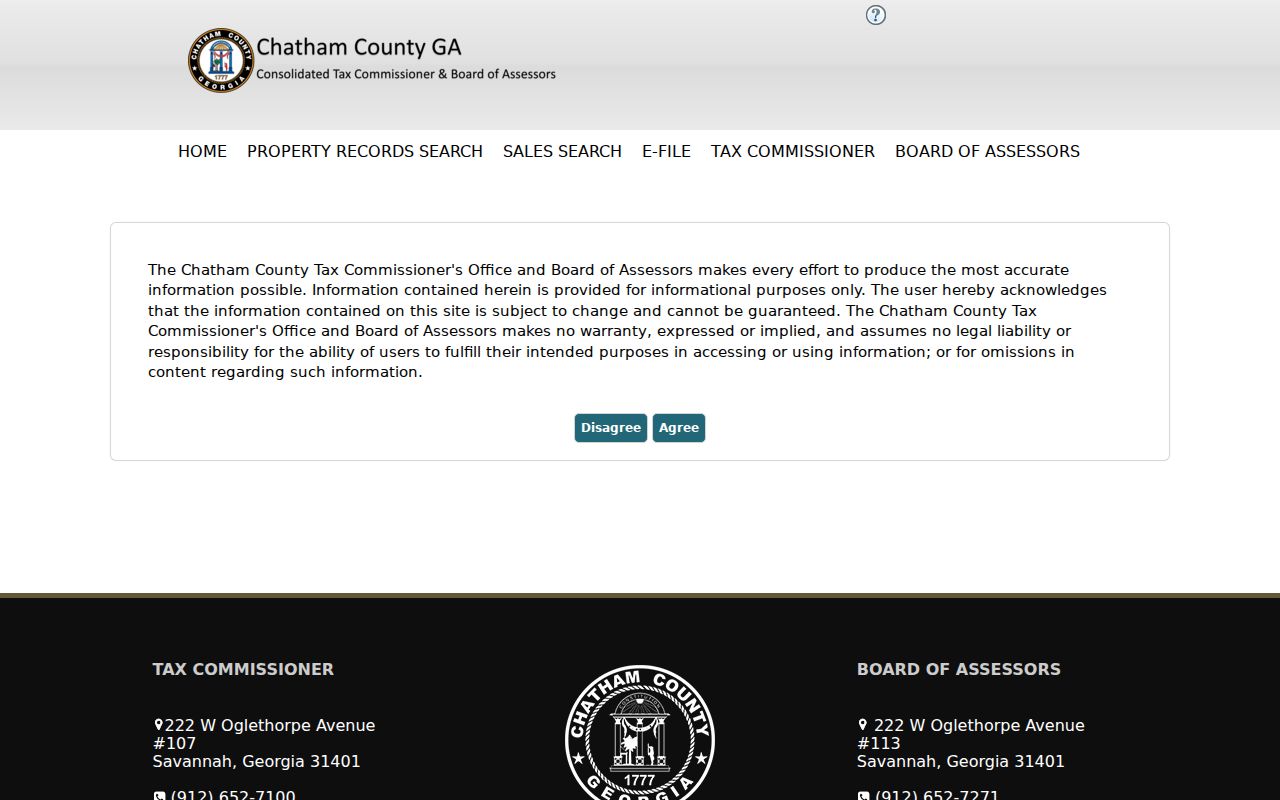
Access and records are two different things. A maintenance window or a failed parcel card never means the Chatham County record itself is missing.
Read a Chatham Property Search Result
A result row is a bundle of labeled facts, not one ownership certificate. The owner of record comes from the assessment roll. Tax mail goes to the mailing address, which might point to an agent, lender, or management office far from Chatham County. The situs address, by contrast, marks the land itself. A sale line is only a transaction clue. It still wants a deed match.
Before trusting a displayed sale, compare its date and price against the deed citation or PT-61 material. A recorded transaction tells you the land changed hands. It does not set today's market value. It does not confirm the whole parcel moved. Read the instrument type and the legal description first. Only then carry the figure into other work.
Every field carries a time stamp of sorts. Chatham's tax bill follows the January 1 owner, yet a deed recorded afterward names the new grantee. The assessor publishes no fixed refresh schedule. The roll owner, bill-year owner, deed grantee, and permit applicant can all differ without any record being mislabeled. Tag each name with its role and date. Then lean on the latest recorded deed as the freshest transfer evidence.
Some parcels lack an ordinary situs address, hold several structures, or carry a postal city that differs from the municipal jurisdiction. There the PIN, lot and block, subdivision, legal description, and map shape matter more than the street line. Never swap a PIN for the legal description. The PIN is a cross-system key, while the deed language defines the land conveyed.
| Owner of record | Name tied to the current roll, subject to timing |
|---|---|
| Situs and mailing address | Physical location and tax-mail destination |
| PIN | Current tax and map identifier |
| Values | Land, improvement, market, and assessed fields if shown |
| Legal description | Lot/block, subdivision, or survey wording |
| Last sale | Date, price, and recording lead if shown |
Official sources document only the fields above, so confirm anything extra on the live Chatham result screen. Keep the assessment year beside every value. Keep the role beside every name.
Open Chatham Parcels in SAGIS
SAGIS is the map stop in any Chatham County property search. Official help lists popup fields such as property address, PIN, owner name, calculated acreage, sale price, zoning and flood zone estimates, historic district, and local districts. Popup fields also include identify, measurement, print, aerial, and layer controls.
Zoom in until parcel polygons can be selected. Then compare the subject PIN and address. Switch on municipality and ZIP layers whenever the postal city might misstate permit jurisdiction. Zoning, flood, wetland, and historic overlays add due-diligence context. A tax parcel line is not a boundary survey.
Public services add building footprints, roads, railroads, docks, one-foot contours, wetlands, hydrology, districts, and annexation context. These layers help test whether the right tract was picked. They also show which city handles permits. They cannot establish an easement, encroachment, monument, or surveyed boundary. For that, pull the recorded plat and deed. Then consult a licensed surveyor if the question stays open.
Confirm Chatham Owners in GSCCCA
The GSCCCA name search is the recording check that follows the tax roll. Once the roll names an owner of record, this index confirms what the recorder actually holds. Filters include party type, instrument type, county, a neighboring-county option, the search name, date controls, results-per-page, and display settings. Individuals are entered last name first. Book/page mode is the stronger choice when a prior source already gives the citation.
A deed index entry can show the parties, the property location, instrument data, and the book/page reference, with images where available. The displayed Chatham date range and the general coverage statement disagree, so check county good-through dates before treating a no-result as proof of no deed.
The live name screen shows a 1990 through 2026 operational range, while the general GSCCCA overview says coverage begins at least in 1999 and that historical data is still being added. Neither statement means every image is online. Save the citation, open the county coverage link, and fall back on the Clerk's record room or the Garden City books when the trail stops short of the transfer you need.
Untangle Chatham Names and Entities
Trusts and LLCs show up under whatever name the deed or assessment data used. The human trustee, member, or beneficiary may never appear. Search the exact entity wording. Try punctuation variants, earlier names, co-owner forms, and both deed roles. The Georgia Corporations Division search can test a business name, control number, registered agent, officer, or designated agent.
Entity data resolves a name. It does not transfer land. Before trusting a same-name match, check PIN, mailing address, legal description, county, date, and book/page.
Life estates resist a tidy owner label. The assessment roll may compress several interests into one line, while the deed or probate instrument explains who received which. Search the estate or trust wording exactly as indexed, and look for a deed of assent or executor's deed. Keep the legal description fixed. A probate order can explain authority, though it cannot prove the land record was updated.
Search Chatham Subdivisions by Phase
GSCCCA's property search mode lets you pick the county. You enter a required subdivision, add optional dates, and set how many results appear per page. That flexibility pays off when a plat or project plan names a subdivision and lot. But the street address may have changed. It happens often in Pooler and Port Wentworth. There, a phase name or planned-development label can outperform the city name as a search term. Keep the phrase exact, though. Cross Creek, The Farm at Morgan Lakes, Savannah Quarters, Wentworth Grove, and Rice Hope each point to a distinct trail in the property records. A stray word sends the parcel search astray. Pair the phrase with the parcel number, lot and block, and plat. Don't assume every phase shares one legal description.
Add the Correct Chatham Permit Layer
Once you know the municipality, city permit records can explain what work touched the land. Savannah's eTRAC searches by address, project name, permit type, work class, and related criteria. Pooler offers CivicGov options for permits, planning, zoning, and inspections. An account is needed for online submission, and hard-copy alternatives are available. Port Wentworth takes Development Services applications in person or by download. The city publishes no public results index. Savannah plan reviews can include survey plats, petitions, zoning actions, business approvals, and certificates of appropriateness. Its permit tracker groups projects by status. It can also produce a radius-based list. Pooler's forms span building, land disturbance, electrical work, planning, and zoning. Port Wentworth's form records the permit type, project value, and project or applicant data. Where a city posts no searchable fields, make a focused records request by address and parcel. Do not expect a search that does not exist.
Remember that a permit applicant is not always the owner of record. Treat permit status, inspections, and plan reviews as evidence of improvements only. Then return to county property records for title and value.
Recover a Missing Chatham Record
When a Chatham County property records search stalls online, a fallback chain still works. Contact the Board of Assessors first. Or use the Superior Court Clerk's Room 304 computers, mail a focused copy request to P.O. Box 10227, or arrange older-book access at the Garden City Records Center. Garden City keeps terminals and microfilm equipment, and older physical material requires an appointment. The Clerk's Real Estate room lists weekday access from 8:00 a.m. to 5:00 p.m. Deed copies run $0.50 per page, and written deed, lien, or plat requests follow the record-request route. The Eisenhower Drive satellite also handles copies and filings. Call the responsible office before traveling, and confirm the volume, image, or microfilm actually sits at that location.
A Georgia Open Records Act request should name the custodian, the parcel number, relevant names, a date span, and the existing record sought. It opens access to records that exist, subject to exemptions and redaction. It cannot force an office to build a new report.
Judge a Chatham Property Search Carefully
An address-first property search suits one known location. A name-first search fits possible holdings, and a PIN-first search is the most exact route to the current parcel. When ownership matters, though, the legal description and recorded deed still settle the match in the Chatham County property records.
| Search Key | Best For | Where It Works | Watch Out |
|---|---|---|---|
| Address | One known site | Chatham Tax and SAGIS | Units and postal-city mismatch |
| Owner name | Possible holdings | Roll and deed index | Entities and same names |
| PIN | Exact current parcel | Tax and map systems | Parcel changes and format |
Not a title search. A Chatham County property search gathers official clues, but it is not a title opinion. Recording lag, name variants, liens, and unrecorded interests can change the legal conclusion.